top of page


I. Game concept:
This project aimed to create a game with a Free-to-Play economic model.
The game is an endless arcade
The character dashes from pillar to pillar placed all over the scene. Its life bar constantly goes down. In order to replenish it, the player has to defeat enemies just by touching them. With enemy waves, the life bar's decrease rate goes faster. In order to hold the rhythm, the player can get power-ups on the map. They allow him to vanquish enemies with more ease. Playing gives the player soft currency that he can use to make the power-ups he gets during the game stronger.
Power-up upgrades can be bought in a shop for increasing prices. Soft currency can be bought for real money to speed up player's progression.
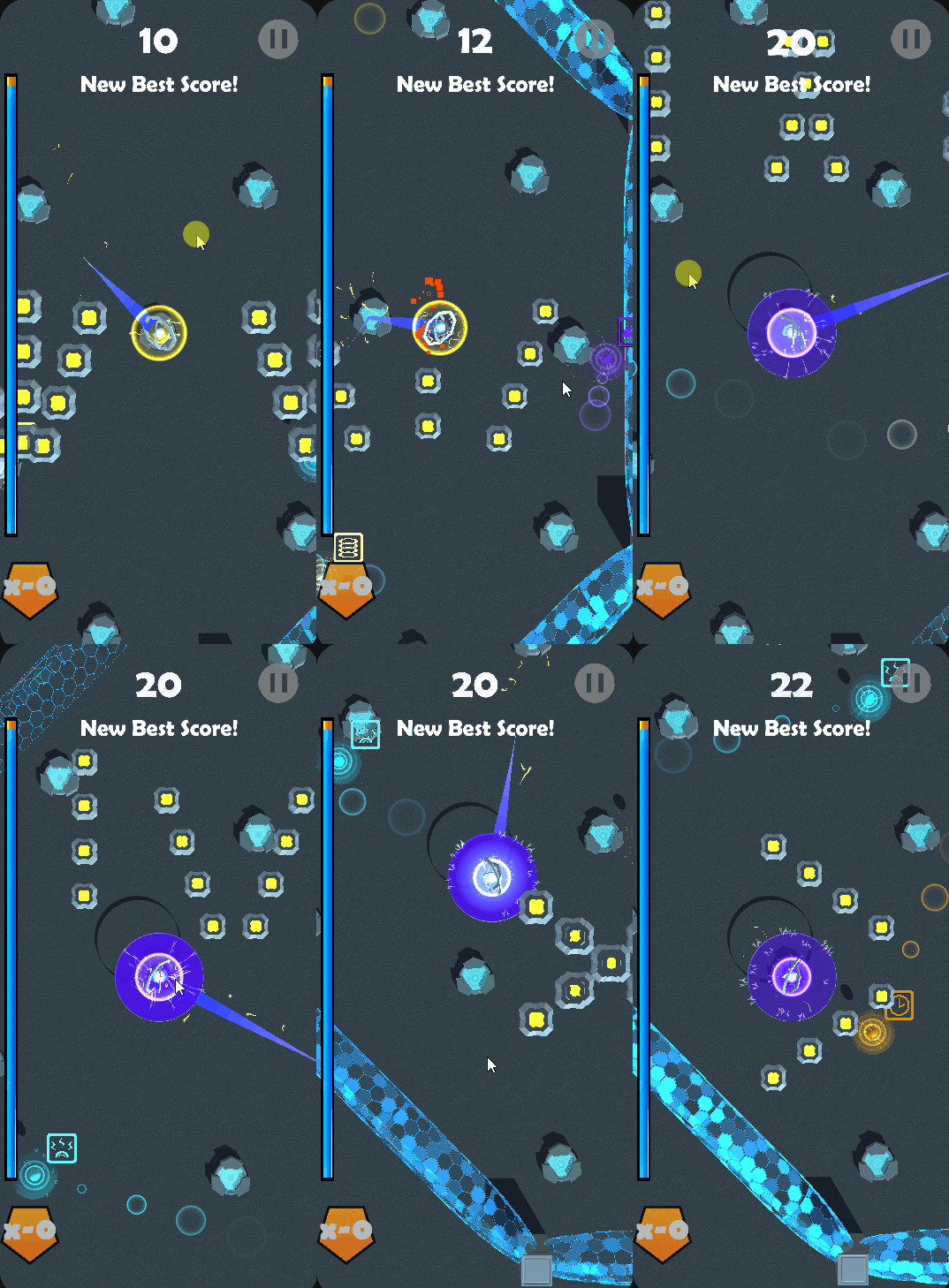
Defeating enemies with a power-up increasing damage zone

Shop where player can upgrade power-ups
II. Personal contribution
Our team was made up of 4 game designers and 3 gameplay programmers. Programmers coded the game on Unity. Among the design tasks, my main role was to make the economic system of the game.
My 1st objective was to make the game playable for a year for free-to-play players. So I used an Excel spreadsheet to adjust daily rewards, upgrade prices, and ad display frequency & rewards in order to make the last upgrade buyable after one year of daily playing.
On the other side, I had to think of players who would pay in order to progress faster. I balanced real money prices to make sure packs' rentability grows with the price. The other important parameter was the time gained from each purchase.
My secondary task was documentation. I've done 3C, game loops, and economic design documents.
III. Post-Mortem
This project was my first approach to economic game design. I was confronted with the F2P game's challenges. I learned valid methods to relate all the variables. I would appreciate working on this aspect of another game on a different scale.
I also received positive feedback from my mates about my documents' usefulness and clearness.
bottom of page